This article was inspired by a Herefordshire Meadows article of the same name, and has been produced in collaboration with the Herefordshire Meadows team (Caroline Hanks, Anna Stankiewicz and Rory Johnson).
The summer of 2026 was the hottest on record, with every county in England, Wales and Northern Ireland recording their hottest ever. The mean summer temperature was 16.5 oC, and the Met. Office has suggested that hotter summers, like this one, are likely to be more common and we should prepare for greater extremes.
https://www.metoffice.gov.uk/blog/2026/deep-dive-what-could-uk-summers-feel-like-in-the-future
The five warmest UK summers on record are compared to 1976, now the 7th warmest on record.
|
Year
|
Mean summer temperature (°C)
|
|
2026
|
16.5
|
|
2025
|
16.1
|
|
2018
|
15.7
|
|
2006
|
15.7
|
|
2003
|
15.7
|
|
1976
|
15.7
|
During the last two summers, vegetation has responded so markedly to the lack of rain because the high temperatures (over 25-30° C) and relentless sunshine have increased the rate of evapotranspiration. Higher evapotranspiration means plants use more water for each unit of carbon they fix, so their water-use efficiency declines. The net effect is a decline in biomass yield. Land plants cannot absorb carbon dioxide without losing water, so there is always a trade-off between water availability and yield.
This makes things difficult for farming, where long term climate stability is important in making decisions about farm management. This summer, the farming community has struggled with water availability resulting in poor crop yields, and boreholes and reservoirs have dried up. Many abstraction licences have been restricted, and grass yields are down, sometimes by as much as 50%, putting pressure on winter-forage stores.
We are told that in southern Britain this is becoming our new climatic reality, and that learning to live and work with higher temperatures as well as increasingly dry conditions is a necessity. It is not an easy feat to change farming practices, which have developed in a milder climate, with challenges in infrastructure and uncertainties around funding making adaptation difficult. In such times the principles of good soil husbandry are more important than ever.
The superpower of floodplain meadows is the way in which their soil, plants, water and soil biota work together and so these species-rich grasslands give us hope. These robust, low-input and largely self-sustaining habitats, are a long-term, stable component of the farm landscape, persisting for centuries and providing consistent ecological and agricultural benefits. Their greatest strength is plant diversity. A diverse sward, unlike a monoculture, isn't relying on one species, one rooting strategy or one response to weather. When conditions are difficult for one plant, another may be better able to cope. Some will slow down, some may go dormant, while others continue to grow. When conditions improve, a varied plant community has more opportunities to recover. Most meadow plants are perennial, keeping most of their biomass below ground. This ensures rapid regrowth of the above ground biomass when suitable conditions are restored after a drought. Some species might take time to reappear in the sward after being in a prolonged dormancy caused by drought but the species will persist.
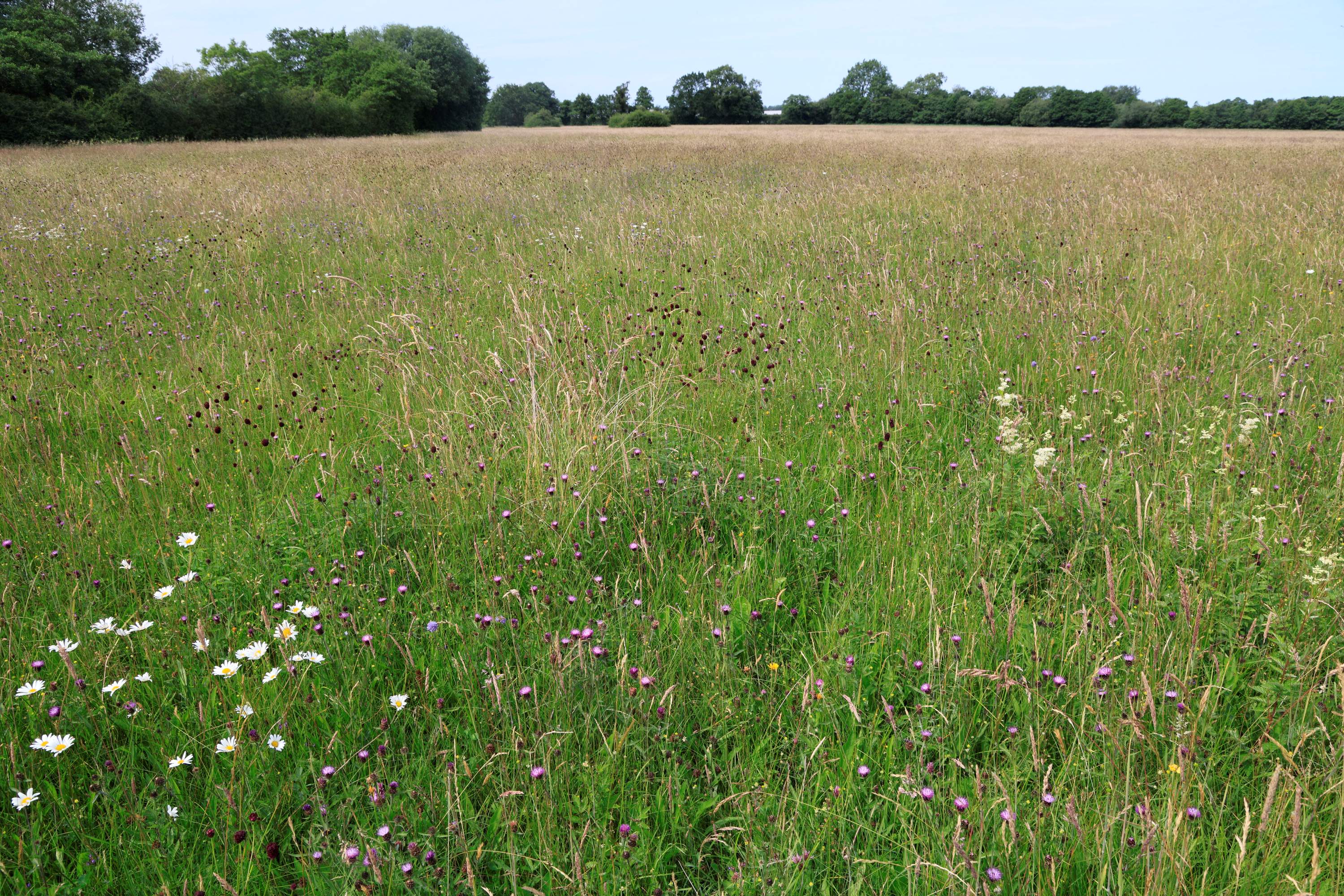
Mottey Meadows National Nature Reserve – taken in June 2026 still looking green and healthy. Mike Dodd
The same goes for the soil biota associated with plant communities – a multitude of bacteria, fungi and invertebrates which drive nutrient cycling and support plant growth. Soil biota can also be highly sensitive to water availability - when drought occurs, their processes slow down. Again, resilience comes from diversity. In a recent study, we found 1200 different molecular species of fungi in the soil beneath a single meadow.
Deep-rooting plants such as great burnet, bird's-foot trefoil, meadow vetchling and knapweed explore different parts of the soil profile, helping them make use of water and nutrients at different depths. Other plants, such as yarrow and hairy sedge have adapted in different ways by producing rhizomes which expand their reach sideways for water and nutrients. Plant roots together with soil biota build the soil’s reservoir of soil organic carbon, which, in turn, increases soil capacity to buffer extremes of water availability. Floodplain meadow soils are deep, carbon-rich and well structured, making them ideal to store water. Soils in the surrounding landscape may only be able to store half the water that the floodplain soil can. Plants are able to tap these reserves, and so we have seen that these floodplain grasslands often remain green whilst the surrounding landscape has turned brown. Where meadows are underlain by floodplain deposits of sand and gravel (as is the case in many catchments,) water is able to flow laterally out of the river to re-wet drier parts of the floodplain, a process known as sub-irrigation. Springs and seepages emerging along the floodplain edge from deep groundwater horizons likewise can be water sources during drought conditions that non floodplain systems do not have access to.
Soils in floodplains are enriched with nutrients from sediment deposition during winter floods. High nutrient availability supports plant growth under summer droughts in many meadow species although it might negatively affect legumes.
Floodplain meadows cannot fix all the pressures brought on by the drought. We have seen lower yields of wildflower seed and the faster ripening has affected harvesting. Floodplain-meadow farmers are reporting poorer yields from floodplain meadows this year due to restricted water, yet those meadows have nevertheless proved to be more resilient than meadows outside the floodplain.
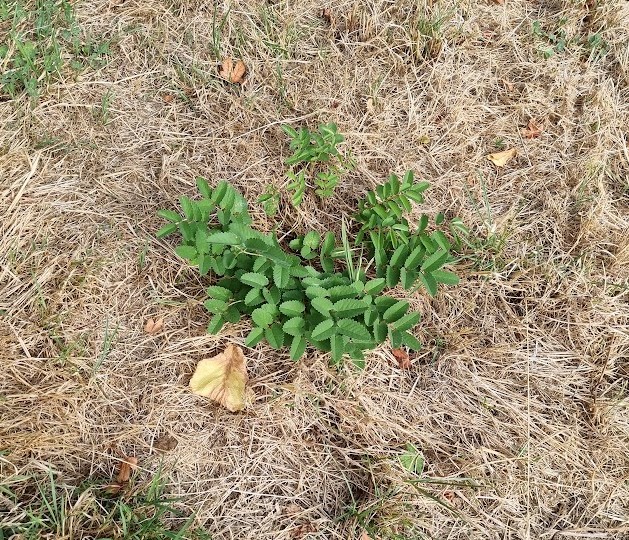
After the hay has been cut, some of the deep rooting species have sprung back, to offer grazing forage at the end of summer, when there is little else around.
Great burnet re-growth after the hay cut, where the surrounding grass plants have remained dormant due to the dryness of the soil (photo taken 25th August 2026, Emma Rothero)
It is important not to pretend that floodplain meadows are a silver bullet, and they won't remove all the challenges facing farmers. But they offer something increasingly valuable to add to the agricultural patchwork - resilience, flexibility and the ability to recover.
North Meadow, Wiltshire. A report from the ground – John Barratt Cricklade Court Leet
This is a short summary of yield and management at North Meadow in Wiltshire. The observations here are reflected elsewhere from meadow managers around the country.
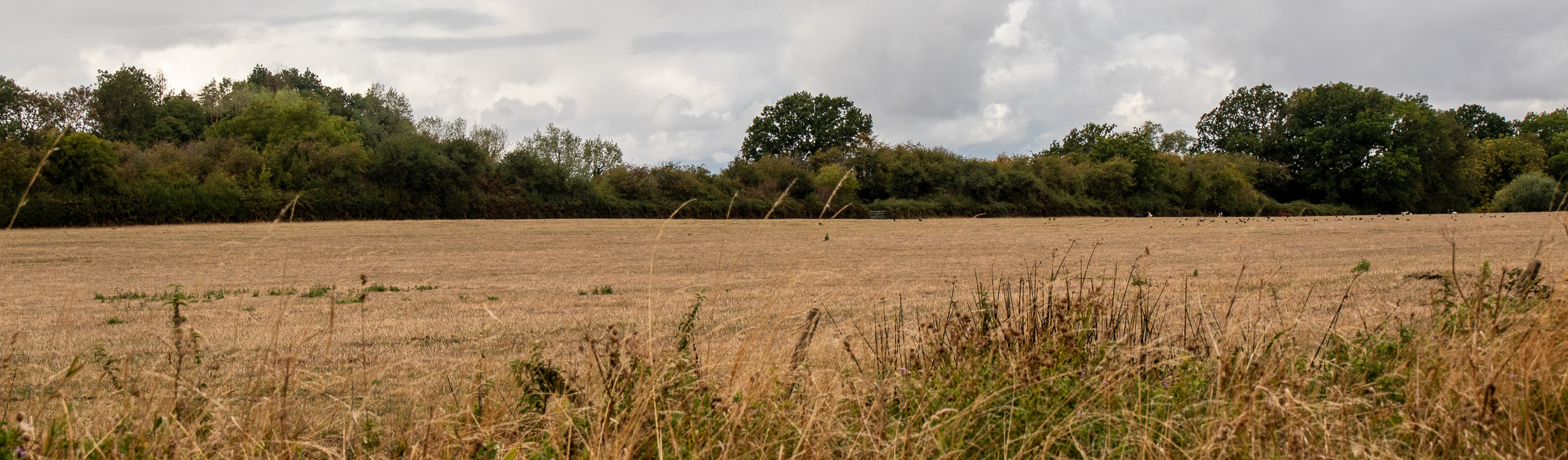
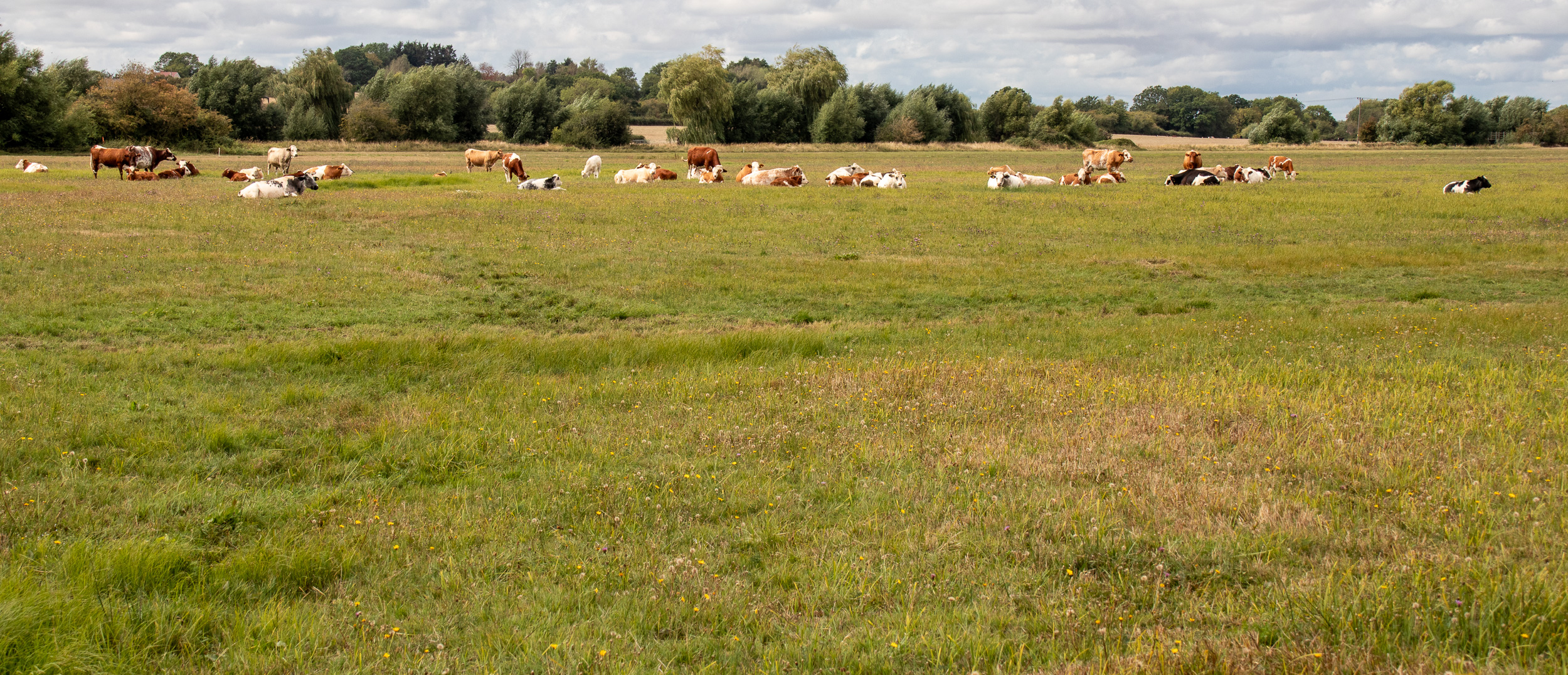
We had a little rain in early June, none in July and hardly any in August. There was a little rain a few days before these photos were taken (30th Aug 26) but it had not had time to affect the grass. North Meadow has been greener than the surrounding fields during the summer and there was sufficient grass to put 56 cows onto the meadow. The grass is now growing strongly. You can see the non-floodplain fields in the distance looking distinctly yellow by comparison.
North Meadow 30th August 2026 with non-floodplain fields in the distance. John Barratt.
Non-floodplain grassland adjacent to North Meadow (30th Aug 26) on the other side of the Thames. It has cows on, but they are receiving supplementary feed as there is little or no grass. John Barratt