Species Recording on North Meadow NNR
John Barratt - Cricklade Court Leet
North Meadow has a long history of annual botanical surveys, with a unique dataset spanning 25 years. This has supported extensive research into its MG4 grassland and Fritillaria meleagris snake’s-head fritillary, for which the meadow is famous. Much less, however, has been known about the rich diversity of invertebrates and other species groups supported by its exceptional vascular plant diversity.
Scan the QR code to explore the database

For some time, we have wanted to complement the 354 recorded vascular plant species with a better understanding of the other species groups present on the site.
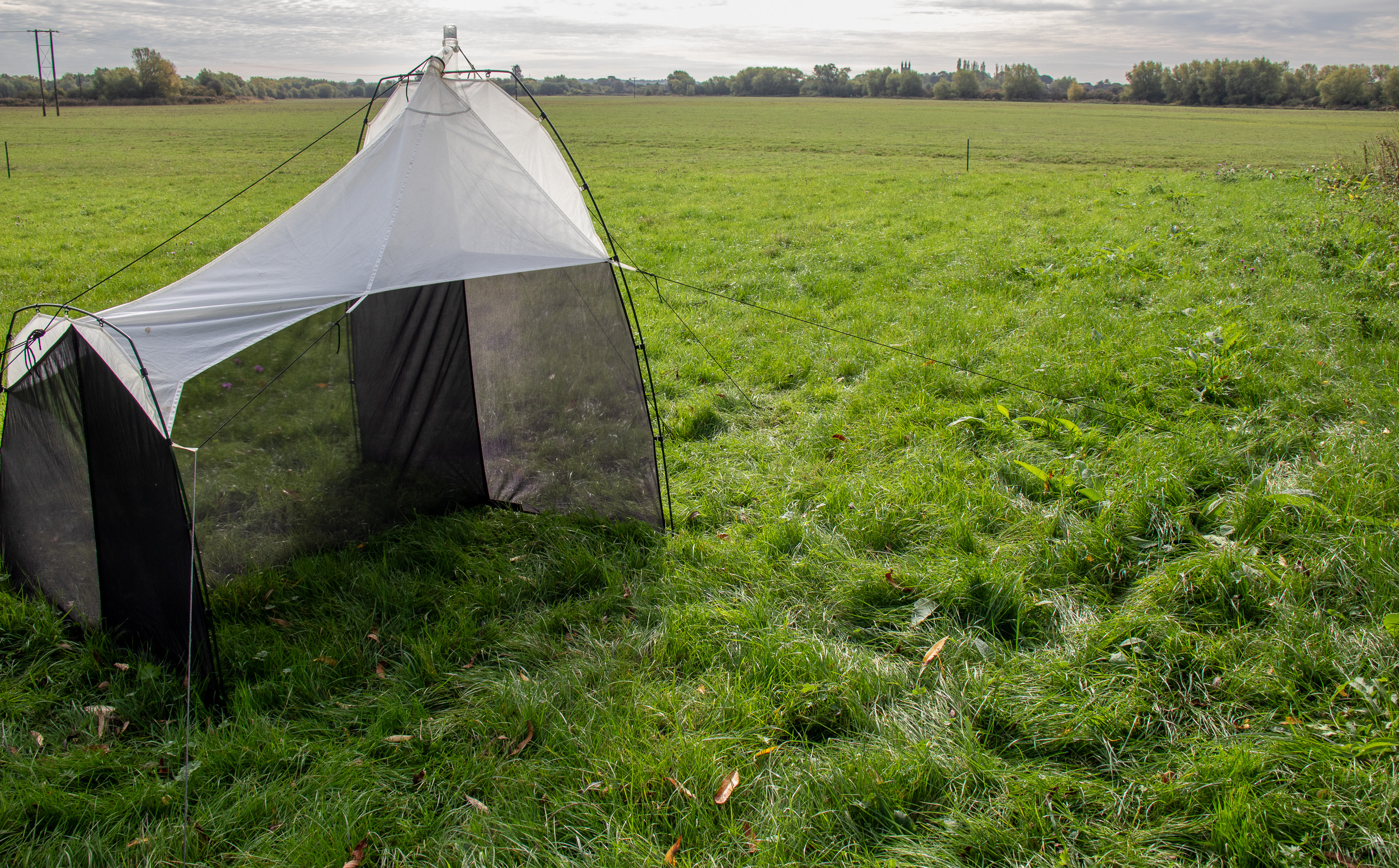
In May 2023, we became a partner in the Wellcome Sanger Institute BioScan project, running a monthly Malaise trap and preparing the captured flying insects for DNA sequencing and species identification. This has given us an opportunity to record the many small and extremely difficult and time-consuming Diptera, Hymenoptera, Hemiptera and Coleoptera that would be impractical to identify in such numbers by conventional recording alone.
Encouraged by the flow of records from BioScan, we organised a BioBlitz in June 2024 and were very grateful for the support of six Wiltshire County Recorders who carried out surveys for us.
Our next step was to bring together the historic records for North Meadow from the Wiltshire and Swindon Biological Records Centre, NBN Atlas, iRecord and Natural England. By then, the North Meadow dataset had grown to around 12,000 records and was becoming difficult to manage as a spreadsheet. We also wanted to make the information readily accessible for research and site management. We therefore began building a relational database with a public website interface.
The database has opened up other possibilities. Records can be linked to the UKCEH Database of Insects and their Food Plants and the Pantheon database, as well as to JNCC Red List and Section 41 designations. Individual species pages also display the underlying historic records, allowing users to examine the evidence behind each species entry, with links to relevant recording schemes and other sources of species information.
We launched the database in February this year and continue to add records. It now contains 1,867 species and 17,369 records.
The results have surprised us. North Meadow appears to support exceptional biodiversity, suggesting that the species richness of floodplain meadow habitats may sometimes be underestimated. The combination of very high plant diversity with river, ditch and other riparian habitats creates a wide range of opportunities for invertebrates. BioScan alone has so far recorded 770 species, placing North Meadow among the top ten of the project's 100 partner sites, with abundance also notably high, despite it being one of the smallest sites in the study.
The Future
New species continue to be added with little sign yet of the rate slowing. We expect the total to exceed 2,000 species this year, with the possibility of considerably more as recording continues.
Perhaps the most exciting stage is still ahead. The database allows us to move beyond compiling species lists and begin asking questions about how the North Meadow ecosystem works. Which plant species support the greatest diversity of invertebrates, and how many of those associated species have we actually recorded? Which plants support vulnerable or threatened invertebrates, and should those relationships influence future management?
The BioScan project has enabled us to build a much more complete picture of the species present on North Meadow. Combined with historic records and ecological databases, it is developing into a site-specific resource that we hope will be useful not only for recording biodiversity, but also for research and the long-term management of this remarkable floodplain meadow.
Thanks to John Barratt for providing the text and images for this article
Malaise trap on North Meadow